



Any way you slice it, the Law of the Sea Treaty (LOST) threatens American sovereignty. So why would the Senate even consider ratifying it?
Treaty proponents such as Senate Foreign Relations Committee Chairman John Kerry, D-Mass., claim the treaty would give the United States important new rights and advantages. But, as Heritage Foundation expert Kim Holmes, a former Assistant Secretary of State for International Organization Affairs, observed last year, LOST offers the U.S. nothing we’re not already entitled to under customary international law.
“Treaty supporters claim ratification will give the U.S. additional rights to oil, gas and minerals in the deep seabed of its extended continental shelf,” Holmes wrote. “But the U.S. already has clear legal title and rights to the resources of its continental shelf (even though the current administration bans drilling there).” How ironic that the anti-drilling Obama Administration is pushing for LOST with the argument that it would somehow it easier for American companies to drill.
Furthermore, there are tax provisions in the treaty that allow the redistribution of wealth from American companies to developing nations.
Ratification of the treaty by the Senate takes a two-thirds vote. LOST proponents plan to hold a few more committee hearings, then bring to treaty to a vote during a post-election, Lame Duck session.
The first hearing, conducted last week in the Senate Foreign Relations Committee, was a real eye-opener. No critics of the pact were allowed to testify. The witness list, hand-picked by the Administration, consisted of Secretary of State Hillary Clinton, Secretary of Defense Leon Panetta and General Martin Dempsey, Chairman of the Joint Chiefs of Staff.
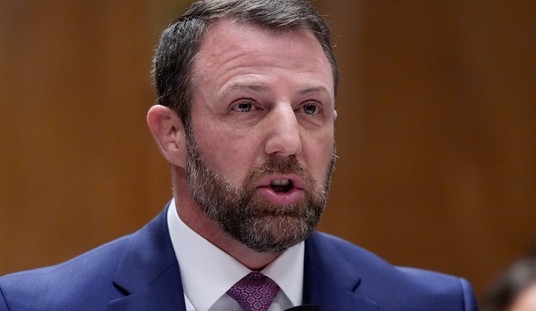
During the hearing, Sen. Bob Corker (R-Tenn.) professed to be starting from a neutral position vis a vis ratification. Directing a query to Ms. Clinton, he said “A lot of people believe that the administration… wants to use this treaty as a way to get America into a regime relating to carbon, since it has been unsuccessful doing so domestically. And I wonder if you might respond to that”
Ms. Clinton’s response? She said she has a legal analysis that knocks down that argument.
But not all Americans are willing to rely on a politically driven legal memo from the Obama Administration as a guarantee that this treaty will not empower the International Sea Bed Authority to force regulations on American business. Those seeking certainty on this vital issue would rather take a pass on the treaty than take a chance on Ms. Clinton’s promises.
Sen. Mike Lee (R-Utah) pushed back on Ms. Clinton’s claim that opponents of the treaty are promoting “misinformation” and “mythology.”
“I am one of the people who has concerns with this treaty,” he said, “and I assure you that my concerns are rooted in something more than mythology. They're rooted in something more than an editorial page. They are rooted first and foremost in America's national sovereignty, and I think that is not something that is to be discounted here.”
Sen. Jim Risch (R-Idaho) expressed dissatisfaction with the Administration’s line of “argumentation,” too. “You addressed the people who oppose ratification of the treaty, and …I hope you weren’t scoffing at us,” Risch said to the Secretary of State. “I am one of those who fall into that category.”
It is typical of the Obama Administration to mock, rather than debate, those who oppose their policies. Which is precisely what Ms. Clinton did at the hearing. And obviously, it’s starting to wear a bit thin in some quarters of the Senate.
The Administration has also suggested that failure to ratify the treaty will in some way impede the U.S. Navy’s freedom of action. Yet Tripp Baird, Director of Senate Relations for Heritage Action for America tells Townhall, “There is no military need for this Treaty.”
Sen. Chris Coons (D-Del.) asked Gen. Dempsey if “failure to ratify the treaty” would “compromise the ability of the United States to project force around the world.” Dempsey responded that “based on our current application of customary international law… our ability to project force will not deteriorate” if the Senate doesn’t ratify.” His answer certainly seems to undercut the argument that the treaty is a military necessity.
Leaving the hearing, one couldn’t help but feel that, even after this full court press by the Obama Administration, conservatives in the Committee remain unconvinced that there is no real problem—or any real advantage—in ratifying the Law of the Sea Treaty.







Join the conversation as a VIP Member